Friday, September 21, 2012

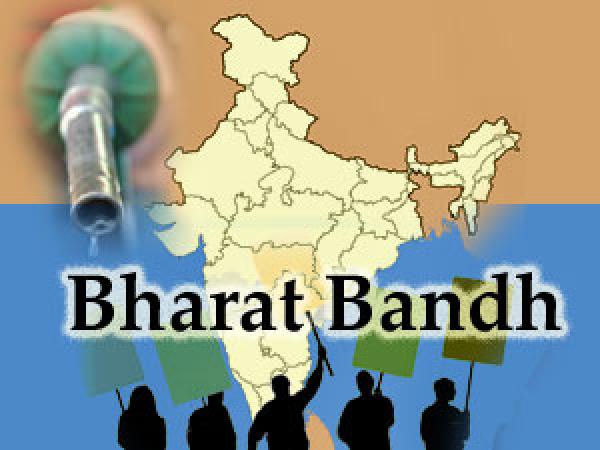
BHARAT BANDH!!!!

“We live in India and are proud to be Indians,” all of us are used to of saying these words since our childhood. But, today I don’t feel so proud of being an Indian. Yesterday(20th sep 2012) there has been a bandh called by the opposition party in the name of hiked diesel prices, reduced number of gas cylinders, FDI in retail and so on. There has been a bandh few months back in May too. But still I am not able to understand this way of showing the protest. Is it the correct way to show our anger? I don’t want to discuss here which party is correct or which party is wrong. But these lonely roads in the city haunt me even in my dreams. 

 I am not someone who gets deeply affected by the bandh or any of the hiked diesel prices, reduced number of gas cylinders or FDI in retail. I am just a common young guy who travels in the bus when required, had to rush to hotel when I feels hungry and no matter whatever the retailer charges, I will pay the price. Then, why am I mourning(शोक)? I am mourning because I think about millions of young kids who woke up early this morning and rushed to their schools but had to return after seeing a big lock on their school gate. I think about that passenger among those thousands of passengers of the trains whose train was stopped by some protestor and he could not reach home on time where his mother was still ill and looking for him before she takes her last breath. I think about millions of laborers who could not go to work because of this bandh and will starve with hunger. I think about millions of shopkeepers who are forced to close their shops by some party.  I think about millions of those auto rickshaw drivers who would still be looking for passengers and so on. And, I feel so sorry because I can’t do anything for any of them. I am writing this article because once somebody told me that pen is mightier than sword(कलम तलवार से अधिक शक्तिशाली है) and I believe if at least one of you understands my reason to write this article, the goal is achieved.

 I don’t say that we should not protest against evils prevailing in the society, we should and we must.  But, I believe that bandh is not the correct way to do it. We can always opt for better ways. Maybe, we should try to protest in front of the Constitution. Maybe we should stop the vehicles of those politicians who are behind these steps and not the poor auto rickshaw-walas. Maybe we should not try to affect our daily meals but of those politicians who fill their belly to its maximum capacity before coming out for a bandh. I think then we would be able to show our protest in a better way and we all could call ourselves- “a proud Indian.”

Thursday, September 6, 2012

The traditional Chhou Dance of Jharkhand


It is one of the tribal dances of Jharkhand. This is a dance form that is performed in the tribal areas of Jharkhand as well as some parts of Orissa and Bengal. The Chhou dance is performed in an open space or a ground field, generally at the night time. The dancing area is surrounded by the fire poles called the mashaals, for the sake of lighting in the dark. But in some of the advanced parts of the state, electrical lamps and light have started replacing the fire poles. The dancers have a bath and perform some puja before their performance. This is for maintaining the sacredness of the dance, because the characters in the dance are of those of various Gods. These dancers use colourful, big sized and decorative masks. Chhou dance is one of the tribal forms of the 'nritya natika' that means dance drama. Most of these Chhou dance performances are based on the stories of Ramayana and the Mahabharata. 
                The people of Jharkhand have their unique and specific types of dance and music styles. The most popular dances of Jharkhand include Jhumar, Paika, Chhou, Agni, Santhal, Nachni, Jamda, Ghatwari, Natwa, Choukara, Sohrai, and the Earth Dance, Lurisayro, and Matha. These dance forms are very graceful, rhythmic and attractive, and are heavily accompanied by the drum beats and the songs or music.

Costumes of Chhau Dance
                   Chhau DanceThe costumes of the Chhau performers are of various colours and designs. It mainly comprises of Pyjamas in deep green or yellow or red shade that is worn by the artistes playing the role of gods; whereas those playing the role of demons have on loose trousers of a deep black shade. Sometimes, stripes of contrasting colours are also used to make the costumes more attractive and different. The costumes for the upper part of the body are full of various designs. The costumes for the character of Goddess Kali are made up of cloth of unrelieved black, and to express the separate and distinct identity, the characters of animals and birds use suitable type of masks and costumes.

Performance of Chhau Dance
              Chhau dance is mostly performed in the open space or ground field during the night. The dancers take a bath and do Puja before performing this dance, in order to maintain the sacredness of dance as the characters in the dance are of gods. Generally, fire poles called Mashaal surround the dance arena, for the purpose of light. The masks generally used for Chhau are made up from the clay and paper. In the performance of the Chhau, some of the characteristics of primitive ritualistic dances are noted. This is also seen through its vigour, style and musical accompaniment mainly with the drum.


Friday, August 31, 2012

SAHIBGANJ(JHARKHAND)---- It can be made a tourist place

Sahibganj district is located in the north east of the state JHARKHAND. It is bounded by 
Bhagalpur and Godda district in the west, Maldah and Murshidabad district of 
West Bengal in the east, Ganga river and Katihar district in the north.

MANGALHAT: Situated 10 K.m west of Rajmahal, it is the site of an important monument Jama Masjid which was built during the reign of Emperor Akbar. 

Rajmahal is a city and a notified area in Sahibganj district in the Indian state of Jharkhand. Rajmahal is the only sub-divisional town in Sahibganj district. It is one of the most historic place in Jharkhand. It includes many historical places such as Singidalan, Neel-Kothi, Jama-Masjid, Khaniyathan and China clay mines etc.RAJMAHALSituated on the right bank of the river Ganges, Rajmahal is a small but historically important town. It was the seat of Government during the Mughal period when Raja Man Singh, general of Emperor Akbar made Rajmahal the capital of Bengal in 1592. Even today relics of the old and prosperous Rajmahal are visible in this one time capital of Bengal. The town has following important monuments.i) Singhi Dalan.ii) Akbari Masjidiii) Tomb of Maina-Bibiiv) Tomb of Mira 


SHIVGADI: This Shiva temple is located in the Barhait block 8 K.M north of Barhait ,sahibganj district and is inside the cave. Water from the mountain drips continuously on the Shivling. Devotees gather here in large numbers on Mahashivratri and whole of Shravan month.


KANHAIYASTHAN: this beautiful and exotic temple located at sahibganj district,jharkhand.it is Situated on the bank of the river Ganges, is a village situated about 13 km. north-west of Rajmahal town and owes its name to the temple of Lord Krishna (Kanhaiya). It is believed that Chaitanya Mahaprabhu once stayed here on his way to Brindaban from Bengal and got the vision of Lord Krishna. Footstep of Chaitanya Mahaprabhu is also preserved here.

Tuesday, July 3, 2012

Save Jharia from Underground Fire

              The Jharia coalfield in Jharkhand is the biggest storehouse of coking coal in the India, consisting of 23 large underground and nine large open cast mines. The mining activities in these coalfields started in 1894 and had really intensified in 1925. The history of coal-mine fire in Jharia coalfield can be traced back to 1916 when the first fire was detected. At present, more than 80 mine fires are reported from Jharia region.                                               
A laborer chips away at a seam of coal  as she scavenges at an open-cast mine in the village of Bokapahari in the eastern Indian state of Jharkhand.
A young laborer chips away at a seam of coal as he scavenges at an open-cast mine in the village of Bokapahari in the eastern Indian state of Jharkhand .. 
A laborer chips away at a seam of coal as he scavenges at an open-cast mine in the village of Bokapahari in the eastern Indian state of Jharkhand .. 
A coal scavenger carries a block of coal illegally taken from an open-cast mine in the village of Bokapahari in the eastern Indian state of Jharkhand ..  
Laborers carry baskets of coal illegally gathered from an open-cast mine  in the village of Bokapahari in the eastern Indian state of Jharkhand..
Laborers carry large baskets of coal as they illegally scavenged from an open-cast mine in the village of Bokapahari in the eastern Indian state of Jharkhand  .. 
Laborers carry baskets of coal illegally taken from an open-cast mine in the village of Bokapahari in the eastern Indian state of Jharkhand  ..  
People carry baskets of coal scavenged illegally at an open-cast mine in the village of Bokapahari in the eastern Indian state of Jharkhand ..  
Youths fly a kite as coal fires from scavenged coal burn near an open-cast mine in the Jharia District of the eastern Indian state of Jharkhand .  
A girl dances near plumes of smoke from fires of coal scavenged by her family in the New Colony village in Jharkand, India . 
Children stand near a Hindu temple in the New Colony village where a community of coal scavengers lives and works in the eastern Indian state of Jharkhand.   
A person stands next to small piles of coal burning after scavenging from an open-cast mine in the Jharia district of Jharkand, India  
Laborers stand next to small piles of coal burning after scavenging it from an open-cast mine in the Jharia district of the eastern Indian state of Jharkhand  
Stray dogs stand on the parched and burnt earth where underground coal fires are burning in the village of Bokapahari in the eastern Indian state of Jharkhand. ..
Smoke from an underground coal fire rises from the ground near an open-cast mine in the village of Bokapahari, where a community of coal scavengers live and work in the eastern Indian state of Jharkhand  
Men stand next to the glowing embers of an underground coal fire in the village of Bokapahari in the eastern Indian state of Jharkhand  . 
A man and child stay warm next to small piles of burning coal illegally scavenged near an open-cast mine in the Jharia district of the eastern Indian state of Jharkhand  
Young coal scavengers stand together next to a burning pile of coal in Jharia in Jharkand, India  
Coal scavengers warm themselves by a pile of burning coal near an open-cast mine in the village of Bokapahari in the eastern Indian state of Jharkhand  where a community of coal scavengers live and work.

Tuesday, June 26, 2012

Finally, Bokaro 'China town' set to close down

Russians roaming the streets of Bokaro has long been a familiar sight here. Now, it’s the Chinese who are flocking in large numbers, prompting many to dub the steel city “Little China”.

In 1965, work started on the Bokaro Steel Plant with Russian collaboration. Now, thanks to the upcoming plant being put by Electrosteel Castings Limited (ECL) at Chandankyari block of Siyaljora, more than 800 Chinese engineers have been at work since early 2008.
Chinese workers, both men and women, who had come in large numbers for construction of the ESL plant and set up a small township at Siyaljoli are now leaving Bokaro. The story is similar to Russian workers who had arrived in the city for construction of the Bokaro Steel Plant (BSL), who finally left about two decades ago.
While the 2.51 million tone (MT) Electrosteel steel plant is based on Chinese technology the city's major 4.5 MT capacity BSL plant, a unit of Steel Authority of India Limited (SAIL), is running on Russian technology. There are some Russian families still residing in the town.

However, the residents will now miss watching Chinese men and women wandering in markets, restaurants, hotels, parks and other places. Besides, the SP office will no longer witness Chinese nationals forming long queues for visa verification. The local market is also losing out on the Chinese clientele who had become their major buyers in a short span of time.